




Last Updated on 03/11/2026 by Dr Chetan Kaher
Ask five people which lasts longer, a dental implant or a bridge, and you will get five confident answers.
Most are based on something a friend mentioned once, not on what actually decides the outcome. If you are weighing up dental implants in London against a bridge, the honest answer isn’t “implants always win.” It’s that a handful of specific factors determine which one holds up longer for you, specifically, and those factors matter more than the general averages people quote.
The comparison at a glance
| Dental Implant | Bridge | |
|---|---|---|
| Lifespan | 15-25 years, often longer | 10-15 years |
| What it depends on | Jawbone health at the implant site | Health of the natural teeth on either side |
| Effect on jawbone | Preserves bone density (replaces the root) | Doesn’t prevent bone loss underneath |
| Treatment time | Longer overall, including healing | Faster to complete |
| Upfront cost | Higher | Lower |
| Lifetime cost | Often evens out or lower | Can rise if anchor teeth need treatment later |
| Best suited to | Good bone density, no major medical barriers | Weaker bone density, or anchor teeth already need crowns anyway |
Why the lifespan gap exists
A bridge depends on the health of the natural teeth on either side of the gap. They’re shaped down to anchor it, so the whole structure is only as strong as they are. If those anchor teeth develop decay, gum disease, or simply wear down under the extra chewing load, the bridge is compromised too, even though it wasn’t the original problem in the first place. This is the part people underestimate: a bridge doesn’t fail on its own. It usually fails because something else around it did.
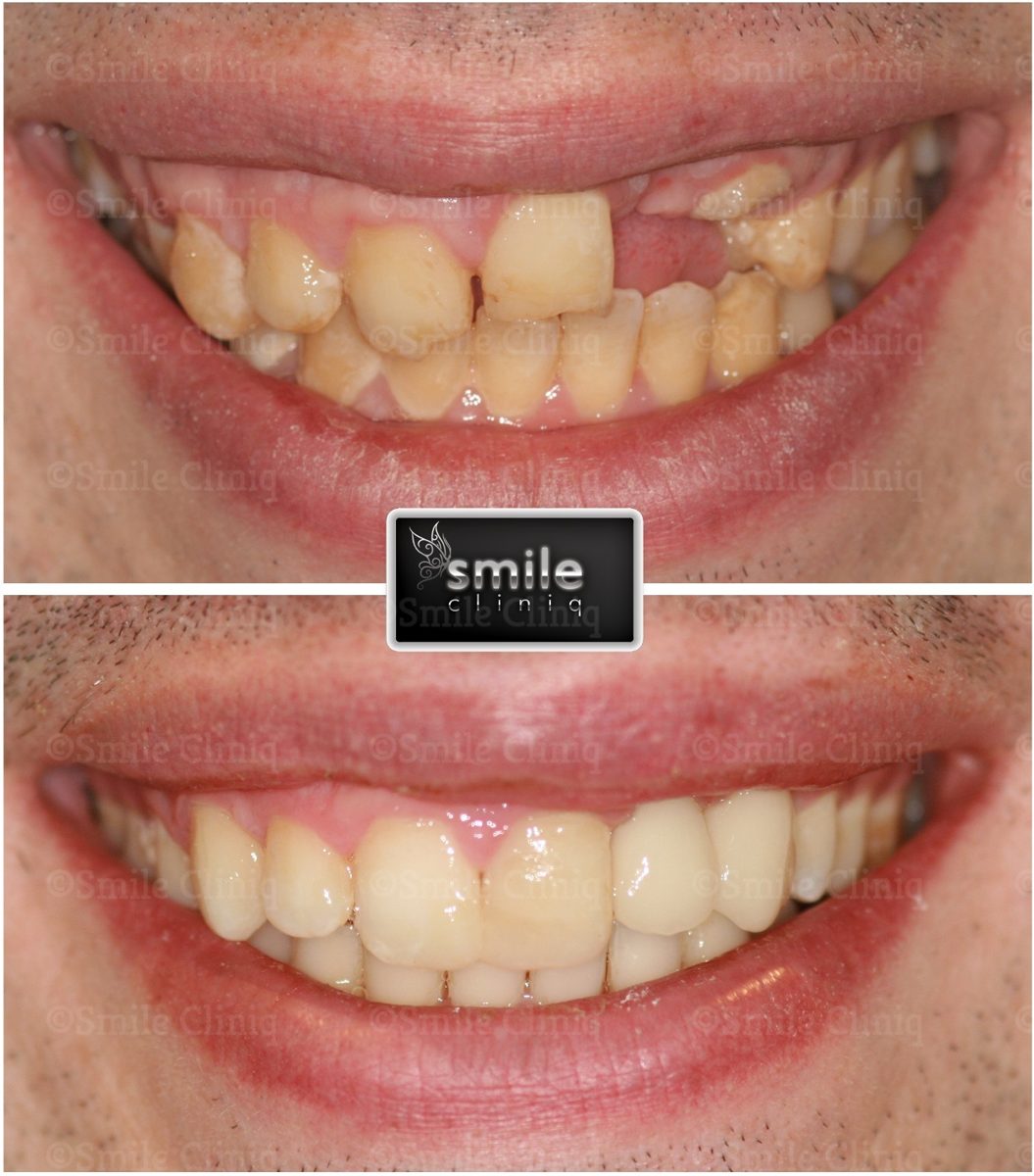
An implant depends on none of that. It’s anchored directly into the jawbone, standing independently rather than relying on neighbouring teeth to hold it in place. That single structural difference is the biggest reason implants typically outlast bridges by a wide margin.
The factor the table doesn’t fully capture: bone loss over time
A missing tooth root means the jawbone beneath it gradually loses density, since it’s no longer being stimulated by chewing. A bridge sits on top of the gum and does nothing to prevent this. The bone underneath keeps shrinking regardless of how well the bridge itself is holding up on the surface. An implant replaces the root directly, so it maintains that stimulation and preserves bone structure far better over the long run.
This is where the two options genuinely diverge in ways that don’t show up for years. Two patients could get a bridge and an implant on the same day, look and feel identical for the first three or four years, and only see the real difference emerge once bone loss under the bridge starts changing how nearby teeth fit together, sometimes affecting bite alignment in ways that weren’t part of the original problem at all.
Treatment time is part of the longevity conversation too
It is worth mentioning that bridges are typically quicker to complete, often within a couple of visits, while implants involve a longer process, including a healing period for the bone to fuse around the implant before the crown is fitted. That extra time isn’t wasted. It is part of what gives implants their durability, since a properly fused implant is doing a genuinely different structural job than a bridge sitting on top of the gum.
So the table says implants win. Does that mean they’re right for everyone?
No. Someone with low bone density, certain medical conditions, or a heavy smoking habit may not be a straightforward implant candidate without extra preparatory work, such as bone grafting. In that case, a well-placed bridge isn’t the “backup” option. It is the more durable, realistic choice for that specific situation, and pushing for an implant regardless of candidacy can actually shorten its lifespan rather than extend it.
Dr Viraj Patel, implant surgeon at Smile Cliniq, starts every implant consultation with exactly this kind of assessment. Understanding dental implants pricing in the UK is also key, as costs vary considerably by case complexity, something worth discussing directly if financial planning is a deciding factor for you.
The honest bottom line
On paper, implants last longer. In practice, it depends on your bone health, the condition of your remaining teeth, and what still needs to hold up in fifteen years, not just five. At Smile Cliniq, this comparison rarely gets settled with a generic answer. A proper look at bone density and surrounding teeth is what actually determines which route makes sense for a given case, rather than picking the option with the higher number on paper.
An implant is never one appointment. Between the assessment, the placement and the healing months before the crown goes on, you will be back several times, which makes where you are going matter more than most people expect at the outset. Dr Viraj Patel places implants at both practices, and the side streets around the Finchley surgery on Ballards Lane are free to park on outside the 2pm to 3pm restriction.
Smile Cliniq has two London practices: Finchley (138 Ballards Lane, Finchley, London N3 2PA, 020 8343 1133) and St John’s Wood (102 Boundary Road, London NW8 0RH, 020 7328 1200).
Frequently asked questions
Can a bridge be converted to an implant later if it fails?
Yes, depending on the condition of the jawbone at that point. One more reason bone preservation matters early on, even if you start with a bridge.
Do implants really need less maintenance than bridges?
Day-to-day care is similar for both, but a bridge needs extra attention to protect the anchor teeth beneath it, which an implant doesn’t require since it stands independently.
Is it true implants can last a lifetime?
For many patients, yes, particularly with good oral hygiene and regular check-ups, though “lifetime” depends heavily on bone health and maintenance, not the implant material alone.