





[rank_math_breadcrumb]
The temporomandibular joint (TMJ) is the hinge that connects your jawbone to your skull, playing a crucial role in everyday activities like eating, speaking, and even sleeping. When this joint isn’t functioning properly, it can lead to discomfort and disrupt your daily life
At Smile Cliniq, our team of expert TMJ specialists is dedicated to diagnosing and treating Temporomandibular Joint Pain and Dysfunction. We’re here to help you regain comfort and improve your quality of life.








Temporomandibular Joint Pain Dysfunction Syndrome (TMJ PDS), includes pain caused by the masseters (jaw muscles) being overworked. TMJ PDS is thought to be relatively common, affecting up to 25% of the population at different times in their lives, however , only 5% seek help. TMJ PDS may occur at any age but is more common in females 20–50 year-olds.
TMJ Treatment in London Reviews
London TMJ Treatment Dentists at Smile Cliniq
- Dr Chetan Kaher

Dr Chetan Kaher
BDS BSc (Hons) MFDS RCS (Eng)
Principal Dentist
- Dr Krishen Shah

Dr Krishen Shah
BDS (Lond) MJDF RCS (Eng) Pg Cert Dental Ed (Beds) MSc Endo (Lond)
Associate Dentist With Special Interest In Endodotics
- Dr Nickil Dhokia
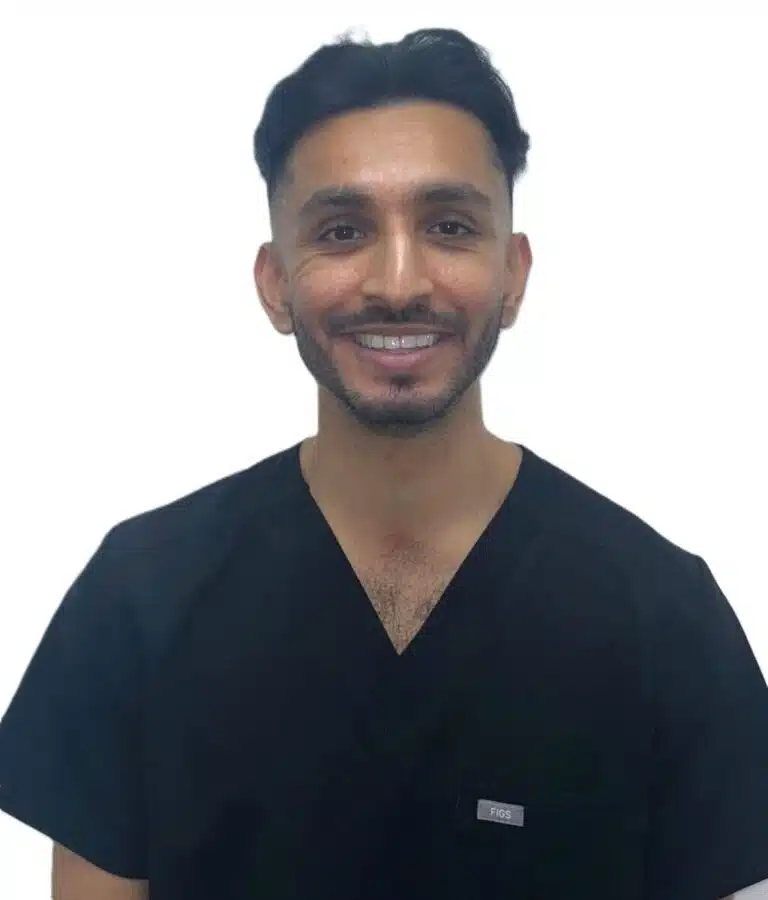
Dr Nickil Dhokia
BDS (Lond) Kings College, PG Cert Advanced Aesthetic & Restorative Dentistry, MFDS
Associate Dentist | Invisalign & Composite Bonding Provider





How Can Smile Cliniq Help with Temporomandibular Joint Pain Dysfunction Syndrome?
At Smile Cliniq, we will perform a thorough examination, which may include radiographs of the TMJ joint. Once completed we have an array of treatments depending on the causative factors; these may include removal of any infection, splint therapy, relaxing the jaw muscles (masseter) with injections, adjusting the bite, and jaw exercises.
Please get in touch if you would like some advice.
High quality affordable dentistry


Hear From Our Happy Patients


Temporomandibular Joint Pain Dysfunction Syndrome (TMJ PDS) FAQs:
There are many simple and effective treatments for managing TMJ PDS, but no single cure. Studies have shown that up to 90% of all patients will get better with self-care, exercises and using a customised hard bite guard to reduce the tension in their jaw muscles.
Occasionally, other types of treatment can help, such as adjusting the biting surfaces of your teeth, medication, or gentle jaw exercises. It is very rare to need specialist dental care (orthodontics) or jaw joint surgery to correct TMJ PDS.
Treatment is based on self-care – the more you help yourself, the more effective your treatment is.
The correct resting position for your jaw is to have your teeth slightly apart and your tongue resting on the floor of your mouth. This allows your jaw and muscles to rest and relax. Your teeth should only touch when you are chewing, swallowing, and sometimes speaking.
- Avoid opening your mouth wide.
- Avoid habits such as chewing your fingernails and gum.
- Avoid straining your neck and back with prolonged poor posture, for example, when you are working at a computer or a desk.
- Eat foods that you do not need to chew hard or for a long time.
- Do wear the hard bite guard if your dentist gives you one.
- Try to reduce the sources of stress in your life if possible and do more general physical exercise if you can.

Since TMJ PDS has many symptoms which overlap with other functional and complex pain syndromes, the outlook for it depends on psychological factors as well as mechanical ones. In most cases, TMJ PDS is managed best with a multidisciplinary approach.
There are some risk factors associated with chronic or prolonged TMJ PDS, and these include:
- Being female.
- Increasing age at presentation.
- Higher reported pain intensity.
- More widespread nonspecific symptoms.
- Comorbid psychosocial factors – for example, anxiety and depression.
Elevated stress, depression and anxiety can often cause muscle tension, including muscles in and around the jaw. Therefore, these mental health issues can exaggerate TMJ PDS pain and symptoms by aggravating the muscles and increasing tension and bruxing(Teeth grinding).
TMJ (temporomandibular joint) issues can flare up due to several factors:
- Stress and Anxiety: These can lead to teeth grinding or clenching, which strains the TMJ.
- Jaw Injury or Trauma: Any injury to the jaw or face can exacerbate TMJ symptoms.
- Misalignment: Poor bite alignment or issues with the alignment of the teeth can put extra pressure on the TMJ.
- Arthritis: Conditions like osteoarthritis or rheumatoid arthritis can affect the TMJ.
- Excessive Jaw Use: Overuse of the jaw from activities like chewing gum or eating tough foods can cause flare-ups.
There is no single cure, but many effective treatments can manage TMJ PDS. Up to 90% of patients improve with self-care, exercises, and customised hard bite guards. Occasionally, adjusting the bite, medication, or jaw exercises may help. Rarely, specialist dental care or surgery is needed.
TMJ headaches are caused by tension and pain in the muscles around the TMJ. These headaches can feel similar to tension headaches or migraines and are often accompanied by jaw pain, clicking sounds, and difficulty moving the jaw. Treating the underlying TMJ PDS can help alleviate these headaches. Managing stress, practising good posture, avoiding hard or chewy foods, and using a bite guard can reduce the frequency and severity of TMJ headaches.
For jaw pain treatment in London, Smile Cliniq offers comprehensive care for TMJ PDS. Our team of experienced dentists will thoroughly examine your jaw, which may include taking x-rays. Based on the examination, we will recommend treatments such as using a mouth guard (splint therapy), botulinum toxin injections to relax the muscles, adjusting the way your teeth bite together (occlusal adjustments), and jaw exercises to relieve pain and improve function.
Find Our Clinics
Address:
102 Boundary Rd, London NW8 0RH
Nearest Station:
Swiss Cottage, Finchley Road, St Johns Wood, Kilburn High road.
Nearest Bus Stop:
Boundary Road / Abbey Road (Buses 139, 189)
Address:
138 Ballards Ln, Church End, London N3 2PA
Nearest Station:
Finchley Central & West Finchley (Northern Line)
Nearest Bus Stop:
Ballard’s Lane / Christchurch Avenue (Buses 13, 125, 460)


[rank_math_breadcrumb]
Other Services

