





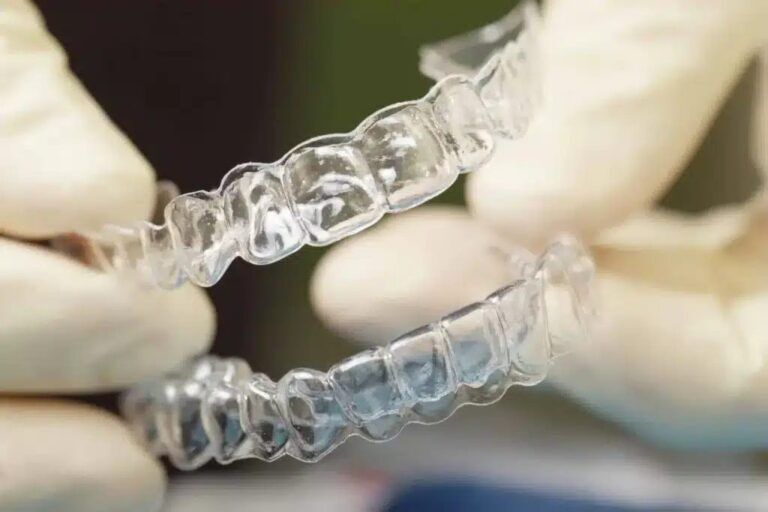
Last Updated on 03/11/2026 by Dr Chetan Kaher
It is more common than most people expect: finishing a full course of Invisalign London clinics prescribed, loving the result for a year or two, and then noticing teeth quietly drifting back toward where they started.
A second round isn’t a failure of the treatment. It is usually a failure of what happened after it.
Why teeth move back at all
Teeth aren’t fixed in place once they are straightened. They are held in position by the surrounding bone, ligaments, and soft tissue, all of which have a kind of memory of where the teeth used to sit. This is exactly why retention matters as much as the treatment itself. Skip or relax that step, and gradual drift is less a possibility and more an expectation.
The single biggest reason people end up needing a second round
Retainer compliance. Overwhelmingly, this is the reason. Invisalign requires 20 to 22 hours a day of wear during active treatment, and once that is done, most people are relieved to be finished and quietly stop wearing their retainer as instructed, whether that is full-time initially, then nights only, long-term. Teeth can begin shifting within months of inconsistent retainer use, and by the time it is visually noticeable, meaningful movement has often already happened.
It’s not always about compliance, though
Sometimes the case itself was more complex than a single round could fully resolve. Significant crowding, certain bite issues, or teeth that had years of established position before treatment began can sometimes need a second, shorter round of clear braces to finish what the first course improved but didn’t fully complete. This isn’t a sign anything went wrong the first time. It is sometimes simply part of a realistic treatment plan for a harder starting case.

Wisdom teeth, pregnancy, and other quiet factors
A few less obvious things can shift a straightened smile too. Wisdom teeth coming through later in life can push against the back teeth, gradually crowding the front ones. Natural jaw changes with age play a role as well. This happens to people who never had orthodontic treatment at all, but it is more noticeable in someone who invested in straightening earlier. None of this means the first round of treatment failed. It means teeth are living tissue, not a fixed sculpture.
How to actually avoid being a two-round case
Dr Nickil Dhokia, who provides Invisalign at Smile Cliniq, points to one habit above all others: treating the retainer phase as part of the treatment, not the reward for finishing it. A few specifics make the real difference:
- Wearing retainers exactly as prescribed, even when teeth look and feel straight.
- Replacing worn or cracked retainers promptly rather than skipping wear until a new one’s ready.
- Attending review appointments even after active treatment ends, so minor drift is caught early rather than after months.
- Being upfront about grinding, since a night guard and retainer sometimes need to be combined rather than treated as separate items.
What if you are already noticing your teeth shifting back
Catching movement early usually means a short, focused refinement is enough, sometimes just a handful of aligners over a few months, rather than a full second course. Waiting until the shift is significant tends to mean more trays, more time, and more cost than addressing it as soon as it is noticed.
How much does a second round of Invisalign cost, roughly
At Smile Cliniq, full Invisalign starts from £3,500, with shorter courses like Invisalign Lite from £2,750 and the i7 (Smile Cliniq’s fastest, most limited option) from £1,795. A refinement or second round, since it is typically correcting minor drift rather than starting from scratch, tends to sit closer to the lower end of that range, sometimes less, depending on how many aligners are actually needed to correct the movement. It is also worth checking whether refinement is already included as part of your original treatment plan, since some providers build a limited amount into the initial cost, others don’t. Smile Cliniq also offers a 0% finance calculator, which is worth using to see what a refinement course would look like spread over monthly payments rather than as a single upfront cost.
Comparing this to traditional braces for teeth
One thing worth knowing: this relapse risk isn’t unique to Invisalign. Traditional braces for teeth carry the same retention requirement afterwards. Teeth move back if retainers aren’t worn, regardless of which straightening method got them there in the first place. The treatment method isn’t what prevents relapse. Consistent retention is.
The bottom line
Needing a second round of Invisalign isn’t a sign the first course didn’t work. It is usually a sign the retention phase wasn’t followed as closely as the active treatment was. Treating both phases with equal seriousness is genuinely the difference between one course lasting a lifetime and needing to start again a few years later.
The reviews after treatment are the part that decides whether you need a second round, and they are short appointments, which is the argument for picking whichever practice you will actually keep going back to. Dr Nickil Dhokia runs Invisalign at both Finchley on Ballards Lane and St John’s Wood on Boundary Road.
Smile Cliniq has two London practices: Finchley (138 Ballards Lane, Finchley, London N3 2PA, 020 8343 1133) and St John’s Wood (102 Boundary Road, London NW8 0RH, 020 7328 1200).
Frequently asked questions
How much does Invisalign cost in London if I need a second round?
At Smile Cliniq, full Invisalign starts from £3,500, with lighter options like Invisalign Lite from £2,750 or the i7 from £1,795. A second round or refinement typically costs less than a full course, since it is usually correcting minor movement rather than treating from scratch, though the exact price depends on how many aligners are needed.
Do I really need to wear my retainer forever?
Essentially, yes, at least on some reduced schedule long-term. Teeth retain a tendency to drift indefinitely, not just in the first year after treatment.
Is it my fault if my teeth move back after Invisalign?
Not necessarily. While retainer compliance is the most common cause, some cases genuinely need a planned second phase regardless of how well retainers were worn.

