


Last Updated on 03/11/2026 by Dr Chetan Kaher
Every few months, a new dental “hack” does the rounds, usually delivered with total confidence by someone who isn’t a dentist, filmed in good lighting, and racking up millions of views before anyone qualified gets a chance to weigh in.
Getting a straight answer often means asking a qualified dentist in London, rather than trusting the comment section. Some of these trends are harmless. A few are genuinely useful. One or two are worth stopping immediately. Here is the honest breakdown.
Mouth taping: the sleep hack with a real reason behind it, but not the one being claimed
The trend: tape your mouth shut before bed to force nasal breathing, supposedly improving sleep quality and, according to some videos, straightening teeth or improving jaw shape over time.
The reality: nasal breathing during sleep is genuinely linked to better sleep quality and reduced dry mouth, so the underlying idea isn’t nonsense. What is exaggerated is the claim that it reshapes your jaw or teeth as an adult. That kind of structural change happens during childhood development, not from a habit adopted decades later. There is also a real safety concern: taping your mouth shut if you have undiagnosed sleep apnoea can be genuinely risky, since it removes your ability to breathe through your mouth if nasal breathing becomes obstructed.
Oil pulling: pleasant ritual, overstated results
The trend: swishing coconut or sesame oil in your mouth for 15-20 minutes, claimed to “pull toxins,” whiten teeth, and replace brushing.
The reality: oil pulling has been studied, and some smaller studies suggest it may modestly reduce plaque and bad breath, similar to a mouthwash. What it doesn’t do is replace brushing and flossing, or meaningfully whiten teeth. The “toxin pulling” framing isn’t based on anything a dentist would recognise. It is not harmful to try alongside your routine, but treating it as a substitute for the basics is the mistake.
Charcoal toothpaste: popular, and one to be genuinely cautious about
The trend: activated charcoal toothpaste, marketed heavily on appearance (dramatic black-to-white before-and-afters) as a natural whitening solution.
The reality: this is one where dentists tend to actively push back rather than shrug. Charcoal is abrasive, and repeated use can wear down enamel over time, which does not grow back once it is gone. Any whitening effect tends to come from surface polishing rather than genuine whitening, and the long-term trade-off, thinner enamel and increased sensitivity, isn’t one most dentists think is worth the short-term visual result.
DIY teeth filing: the one to stop immediately
The trend: using a nail file to smooth or reshape teeth at home, usually to fix a small chip or uneven edge.
The reality: there is no safe version of this. Enamel does not regenerate, and filing it down at home, without knowing how much can safely be removed, risks permanent sensitivity, structural weakness, or exposing the inner layers of the tooth. Anything here should be done by a professional, full stop.
Turmeric paste and other “natural” whitening pastes
The trend: applying turmeric, baking soda, or lemon juice pastes directly to teeth for whitening.
The reality: mixed at best. Turmeric can stain more than it whitens in some cases. Lemon juice is acidic enough to soften enamel with regular use, which is the opposite of what you want. Baking soda is mildly abrasive but generally low-risk in moderation, though it will not deliver anything close to professional whitening results.
So why do dentists seem to be constantly debunking these?
Because the trends genuinely do vary. Some are low-risk curiosities. Others carry real, if slow-building, consequences. The problem with letting a video be the only source is that risk and reward get flattened into a single confident tone, regardless of which category a trend actually falls into. A cosmetic dentist in London patients see for actual whitening or reshaping treatment is working with methods that have been tested for exactly the outcome being claimed, rather than a home remedy borrowing dental language it hasn’t earned.
What is actually worth trying, and what isn’t
Reasonably low-risk: oil pulling as a mouthwash supplement, baking soda in moderation, mouth taping if you don’t have sleep apnoea concerns and treat it as a comfort habit rather than an orthodontic fix.
Skip entirely: charcoal toothpaste long-term, DIY filing, acidic whitening pastes.
The honest takeaway
None of this means every trend online is nonsense. Some have a kernel of real science behind them. But there is a meaningful difference between a low-stakes habit and one that trades short-term satisfaction for long-term enamel damage. When in doubt, it is worth asking a private dentist in London patients trust for a professional opinion before adopting anything that touches the structure of your teeth directly, rather than finding out the trade-off only once it is already done.
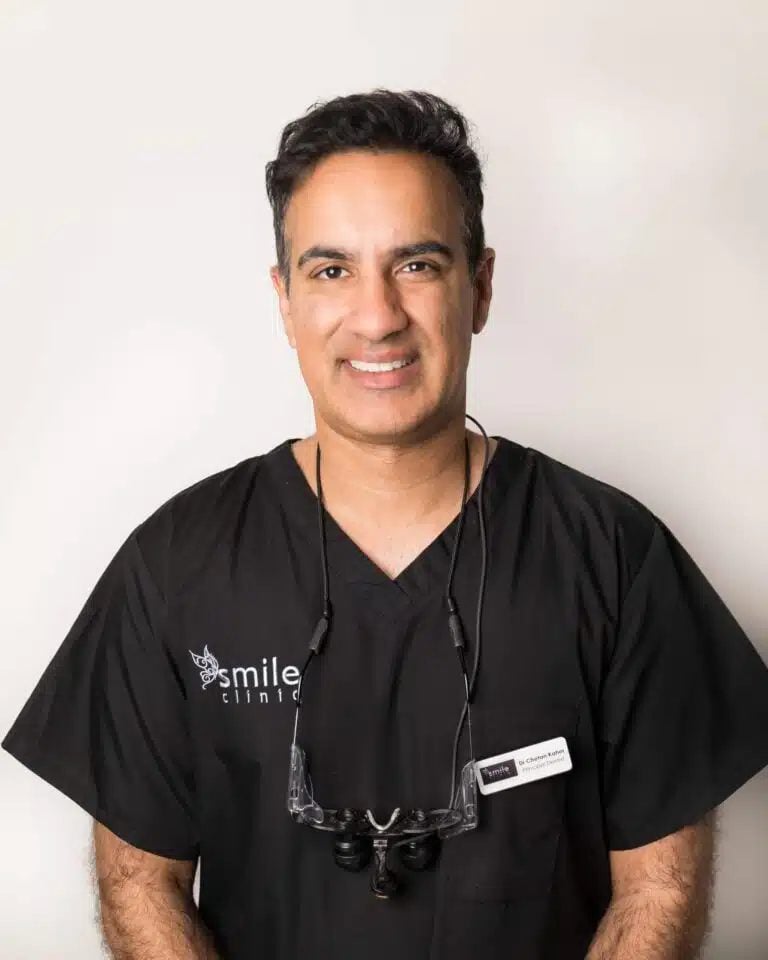
Dr Chetan Kaher, the principal dentist here, fields a version of these questions most weeks, usually from someone halfway through trying one of them. Asking before you start is free, and cheaper than fixing enamel that has already been filed or scrubbed away. Both practices, Ballards Lane in Finchley and Boundary Road in St John’s Wood, will give you a straight answer on the phone.
Smile Cliniq has two London practices: Finchley (138 Ballards Lane, Finchley, London N3 2PA, 020 8343 1133) and St John’s Wood (102 Boundary Road, London NW8 0RH, 020 7328 1200).
Frequently asked questions
Is charcoal toothpaste really that bad if I only use it occasionally?
Occasional use is lower risk than daily use, but it is still abrasive, and there is little upside compared with proven whitening methods that don’t carry the same enamel risk.
Can oil pulling actually replace mouthwash?
It can be a reasonable addition, but it should not fully replace brushing, flossing, or a fluoride mouthwash, since it doesn’t offer the same proven protection.
Are any TikTok dental trends actually recommended by dentists?
A few overlap with genuinely sound advice, like reducing sugary drinks or using a soft-bristled brush, but most viral trends specifically marketed as “hacks” tend to oversell results or skip the risks entirely.

Related Blogs