




Last Updated on 03/11/2026 by Dr Chetan Kaher
It is usually the second question people ask, right after “how much does it cost?” For anyone researching composite bonding London clinics offer, the honest answer sits somewhere between 3 and 7 years, sometimes stretching to a decade with the right care, sometimes needing attention sooner.
That range isn’t vague marketing. It genuinely depends on habits, technique, and how the bonding is maintained.
What composite bonding actually is
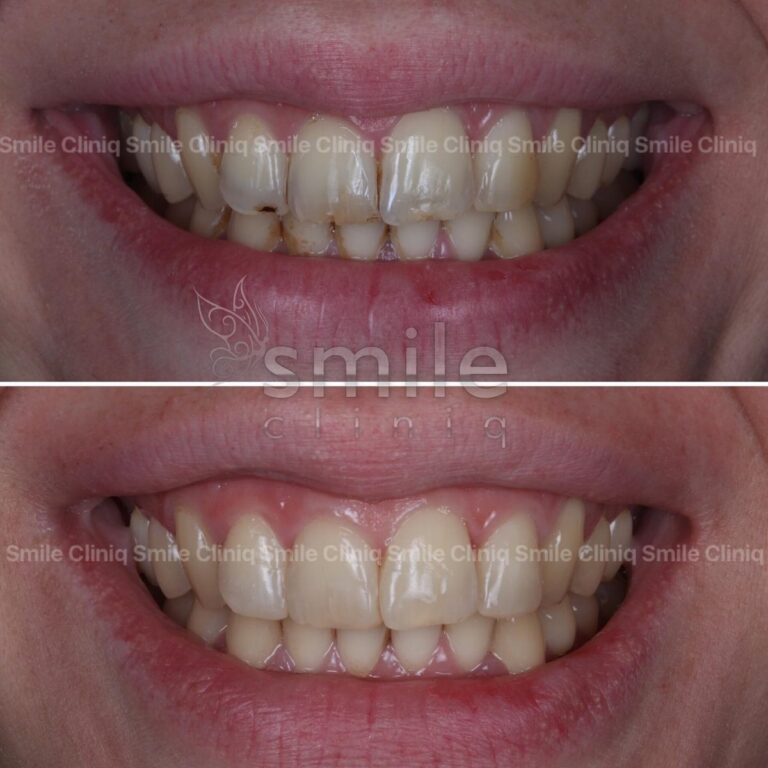
Bonding involves applying a tooth-coloured resin directly to the tooth, then shaping and hardening it under a curing light to correct chips, gaps, or discolouration. Unlike a crown or veneer, it removes little to no natural enamel, which is part of why it appeals to people wanting a quick, reversible cosmetic fix rather than a permanent structural change.
What actually determines how long it lasts
The resin itself is softer and more porous than natural enamel, which is why it is more prone to staining and minor chipping over time. A few specific habits shorten its lifespan noticeably:
- Biting nails, chewing pen lids, or using teeth as tools.
- Grinding or clenching at night without a guard.
- Regular coffee, tea, red wine, or tobacco staining the resin faster than enamel.
- Skipping routine dental cleanings, which allows small imperfections to worsen unchecked.
None of these causes sudden failure. They cause gradual wear that most people don’t notice until it is pointed out, or until an old photo makes the difference obvious.
How the bonding itself is done affects how long it holds up
This is the part most generic advice skips. Dr Nickil Dhokia, who provides composite bonding at Smile Cliniq, points to layering technique and shade-matching precision as major factors in durability, not just the material. Resin built up in thin, careful layers bonds more securely and resists chipping better than resin applied in one rushed, thick application. This is a large part of why composite bonding results vary noticeably between providers doing what looks, on the surface, like the same treatment.

Composite bonding vs veneers: the honest trade-off
Veneers, typically porcelain, last considerably longer, often 15 years or more, and resist staining far better than resin. But they require some enamel removal, cost more upfront, and take multiple visits to fit properly. Bonding trades that longevity for speed, affordability, and reversibility. If your concern is a minor chip, small gap, or mild discolouration, bonding is usually the sensible fit. If you want a long-term, stain-resistant result and are comfortable with a bigger initial commitment, veneers are worth a direct comparison before deciding.
Signs it’s time for a touch-up, not a full redo
- A colour mismatch developing between the bonded tooth and its neighbours.
- A small chip catching on your tongue.
- A surface that’s lost its polish and looks duller than it did originally.
Catching any of these early usually means a straightforward repair rather than replacing the whole tooth, and it tends to cost meaningfully less too.
How to actually extend the lifespan
- Use a soft-bristled brush and avoid scrubbing the bonded area aggressively.
- Cut back on staining drinks, or rinse with water after having them.
- Wear a nightguard if you grind your teeth.
- Book a professional polish every six months, which keeps the surface smoother and less prone to picking up stains.
- Address small chips as soon as you notice them rather than waiting.
How much does composite bonding cost in London, and does a touch-up cost less than a redo?
Cost varies by how many teeth are involved and the complexity of shade-matching. Anyone comparing pricing for composite bonding London clinics should know that a small, early repair is almost always cheaper than waiting until the bonding has visibly failed and needs full replacement, which is one more reason it’s worth addressing issues as soon as they appear.
Setting realistic expectations
Bonding was never designed as a permanent fix. It is a medium-term cosmetic solution, and knowing that from the outset is what separates someone who gets seven good years from it and someone who feels let down after three. It is not a lesser treatment for being temporary. It is simply a different trade-off to veneers or crowns, and one that suits people who want flexibility over a lifelong commitment.
The bottom line
Composite bonding rewards a bit of attention. Avoid the habits that wear it down fastest, keep up with routine polishing, and address small issues early, and it will comfortably sit toward the longer end of its range rather than the shorter one.
Bonding holds up best when someone keeps an eye on it, which in practice means a polish every six months rather than an annual scramble. Both practices run those appointments: Ballards Lane, a short walk from Finchley Central, and Boundary Road in St John’s Wood, a few streets from Abbey Road. Free side-street parking in Finchley, outside the 2pm to 3pm hour.
Smile Cliniq has two London practices: Finchley (138 Ballards Lane, Finchley, London N3 2PA, 020 8343 1133) and St John’s Wood (102 Boundary Road, London NW8 0RH, 020 7328 1200).
Frequently asked questions
Can bonded teeth be whitened afterwards?
No. Resin does not respond to whitening treatments, which is why any whitening should happen before bonding, not after, to make sure the shade matches.
Is bonding painful?
Generally not. It does not usually require anaesthetic unless it is being used to treat a cavity underneath.
Can bonding close small gaps between teeth?
Yes, this is one of its most common uses, offering an alternative to braces for minor spacing issues.
Is dental bonding in London more expensive to maintain than veneers over time?
Not usually. Even accounting for periodic touch-ups, bonding tends to stay more affordable across a comparable number of years, since veneers carry a much higher cost from the outset.
How often will bonding realistically need replacing?
Most patients need a touch-up or redo somewhere between years 5 and 7, though careful maintenance can push that closer to 10.