
OPEN EVENINGS
AND WEEKENDS












London’s Highly Rated & Best Endodontist London
If you’re suffering symptoms from root canal and looking for the best endodontist London to help, then our team of highly experienced specialist endodontists in our state-of-the-art clinic can help.
What is a Specialist Endodontist London & How do they differ from a dentist?
An endodontist is a root canal specialist that deals with problems with the pulp of the tooth and root canal infection.
Generally, an endodontist has completed a dental degree (5-years) and then completed further specialist training (3-5 years) on root canal treatments.
Treatment of an infected pulp usually requires a root canal treatment. A root canal treatment is when the pulp, containing the nerve and blood supply of the tooth, is removed and a rubber filling is packed inside, with a filling to cover the tooth at the end.
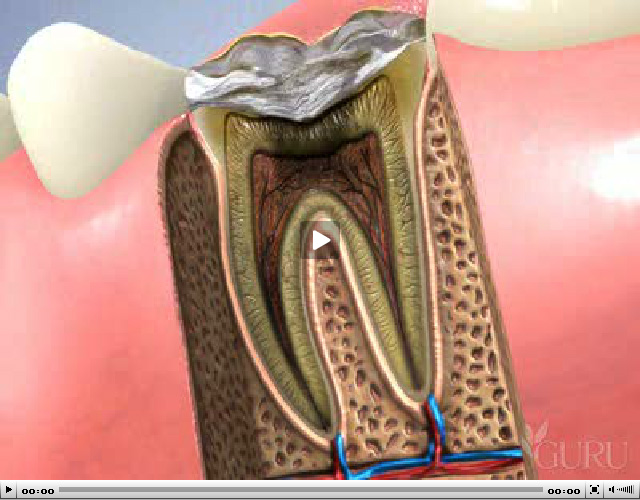
An Overview of The Tooth Structure:
A tooth is made up of three parts:
- The enamel, which is the hard outer coating of a tooth.
- The dentine, a softer, bone-like material that supports the enamel.
- The pulp, which is soft tissue (containing nerves and blood vessels) at the centre of the tooth.
The Main Purpose of Root Canal Treatment
The pulp has a path that runs down through the inside of the tooth and into the gum and jawbone. This path is known as a root canal. In some cases, a single tooth can have more than one root canal. The term root canal is slightly misleading because it implies that the pulp and the root canal of the tooth are empty. However, the pulp and the root canal are made up of soft tissue that contains nerves and blood vessels.
If the pulp becomes infected by bacteria it will begin to die, which could result in the loss of the tooth. There is also the risk that the infection could spread down into the root canal, which may lead to the development of a painful dental abscess (a pus-filled swelling). The infection could then spread to your gums (causing a perio-endo lesion) or the tissue and bones that support your teeth (periodontitis).
Root canal treatment is designed to save the tooth and prevent the risk of root canal infection. The inflamed or infected pulp is removed from the tooth and the root canal is then cleaned of all bacteria. After the bacteria has been removed, the root canal and pulp are filled in using an artificial substance, before being sealed.
Specialist Endodontist treatments in London – Root Canal Treatment
What is Root Canal Treatment?
Root canal treatment is a dental procedure by a registered endodontist designed to treat infection or inflammation of the nerve or pulp of a tooth. This may be caused by deep decay, a fracture of the tooth or severe periodontal disease.
What is the procedure root canal treatment?
Root canal treatment can be very complex and is a time-consuming procedure, and in some difficult cases it is best to see a specialist endodontist in London straight away. This is because the first root canal treatment has the highest chance of success, and if it is not done to a high standard, there is a risk of the root canal infection. If this happens, there is a need for a re-root canal treatment. Unfortunately, the success rates of re-root canal treatments are lower, hence it is important to do our best to get it completed correctly the first time.
A root canal treatment can be done in one or two stages by our in-house endodontist in London. It consists of the decay and pulp initially being removed. The canal walls are then smoothed and shaped using single use files. The canals are disinfected using an irrigant such as sodium hypochlorite or iodine. An antibiotic paste may be placed inside the root and a temporary filling placed if the treatment is to be completed in two stages.
The tooth is then left for a few days to settle down and allow the intra canal medicament to work. The second stage can then take place. The temporary filling and intra canal medicament are removed, and canals again disinfected. A gutta percha (type of rubber) filling is then packed tightly inside the canal, and a filling placed on top. Most root canal treated teeth require a dental crown afterwards.
Root canal treatment is one of the most challenging treatments for a dentist to perform. There are many risks and possible causes of problems when performing a root canal treatment, and accurate measurements, correct instrumentation, moisture (bacteria) control and correct filling technique are vital to ensuring a good result.
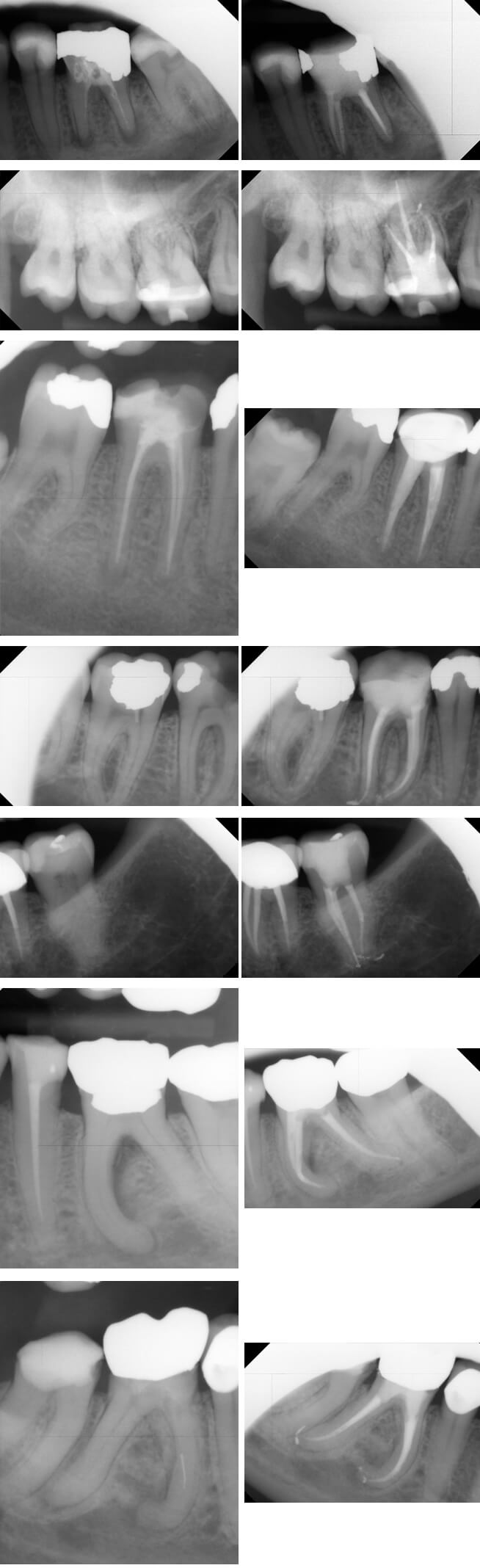
Root Canal Posterior
Book to see the Best Endodontist London Has Today!
If you have root canal pain and think you require treatment from our London endodontist or want to ask a few questions about seeing our endodontist about a root canal treatment, just simply call our number on 020 8090 9077. You can also contact us at our dentist London via email at mailto:info@smilecliniq.com
Endodontist London FAQs
Is root canal treatment painful?
Root canal treatment is commonly perceived as being a painful procedure. In fact, in the hands of a properly trained dentists, root canal treatment is relatively painless. Root Canal Treatments carried out at Smile Cliniq, are in-line with best practice techniques using Protaper files, electronic apex locators and Sodium hypochlorite irrigation.
What Should I consider when booking endodontist London treatment?
Here are handful of things to consider when looking to book endodontist London treatment:
- The use of isolation techniques including rubber dam for a more sterile working environment increasing success rates
- The use of Electronic Apex locators, for better measurement accuracy of the canal length
- The use of local anaesthesia for full painless treatment
- Full costs explained, without any nasty hidden extra charges
- The use of modern Protaper files to ensure that the canals are shaped efficiently
- Will files be thrown away or kept solely for you to avoid risk of cross infection
- Use of powerful disinfectants to improve success results Can warm obturation equipment be used to maximally fill canals where necessary
- The use of low dose digital radiographs for diagnosis and post operative evaluation
Will I experience a lot of pain after root canal normal?
Even with the best endodontist London, it is very normal to feel tenderness in the area for several days after your root canal, as well as some soreness in your jaw after keeping it open for the entire procedure. In most cases, pain will usually peak 17 to 24 hours after the procedure. To deal with the pain, most over-the-counter pain medications can help alleviate it while also keeping your head elevated when sleeping the first few nights helps too. Any severe pain or pressure that lasts for more than a few days should be reported to your endodontist.
What is a normal root canal recovery time?
Your endodontist in London will advise that you’ll experience continual gradual healing during the first week after your root canal.
What’s the aftercare recommended in the few days after treatment?
During the next few days, you’ll want to ensure that you’re taking the following measures:
- Continue taking your medication as prescribed
- Eat softer foods
- Take care to chew on the side of your mouth that didn’t go through the procedure
- Dental hygiene is important, though be careful when brushing the tooth
- Please click here for our fees guide.
- Please click here for examples of our work
- For further details of our techniques, materials and techniques please click here.
- Please click here for our guide to maintaining your oral hygiene.
- Interest free payment options are available
- Return to the top of the page












Finchley
020 3582 8621
St Johns Wood
020 3627 8732


Smile Cliniq Limited. A company registered in England and Wales. Company number 08279068.
Registered office: C/O TG Associates 7 Jardine House, Harrovian Business Village, Bessborough Road, Harrow, Middlesex, HA1 3EX
Terms of Use | Privacy Policy | Health & Safety Charter | Complaints procedure | Data Protection | Cookie Settings
Website by Digimax Dental
